C-Therm Technologies
C-Therm Trident
The ultimate thermal conductivity toolbox — MTPS, TPS, TLS and THW transient sensors in one modular…
Thermal Conductivity Application
Advanced thermal conductivity testing for EV thermal management — accelerate time to market and prevent thermal runaway.
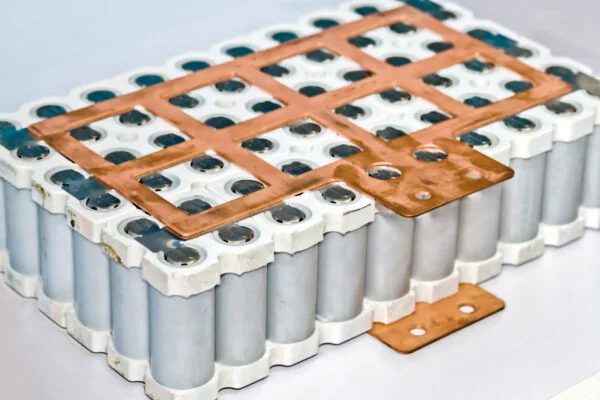
Problems surrounding thermal management are amongst one of the largest challenge areas facing electric vehicles (EVs). EV manufacturers don't have a lot of time to address the challenge. Poor thermal management can result in weaker product performance, reduced lifecycle and, in a worst-case, thermal runaway events in which serious damage to the product and/or user can occur. To avoid such issues, it is crucial to have a proper understanding of the thermal conductivity of the materials used in the construction, particularly those of the battery. It is important to do this fast as the industry is undergoing significant disruption with engineering teams feeling significant pressure to shorten the time-to-market while hitting the quality performance needed to remain competitive.
C-Therm's Trident Thermal Conductivity Instrument provides advanced capabilities for providing critical insight on the heat dissipation qualities of components and materials.
Trident Thermal Conductivity Instrument with MTPS, TPS, and TLS sensors. Accurate data is crucial for material selection and computational thermal modelling (FEA / CFD) purposes. Some examples of where thermal conductivity is considered a critical performance attribute in the overall thermal management of electric vehicles include:
● Battery pack and enclosure ● EV coolants ● Phase change materials (PCM) for battery cooling ● Electric motor potting compound and other thermal interface materials (TIMs)
● Axial cooling channel within a motor stator ● 3D printed parts (metal and plastic)
● Thermoelectric generators for energy harvesting ● Honeycomb ceramics ● Impregnated resin for electric motors ● Thermally conductive adhesives It is important to understand that many traditional methods for thermal conductivity are inadequate for a number of the above materials. The composites materials developed for such applications are often anisotropic and have a heat dissipation that is an order of magnitude different in the axial and radial orientation. The composites are often filled materials with additives such as boron nitride and other conductive fillers added to the polymer matrix. Understanding the distribution of such fillers is important in understanding overall performance. These materials are not typically homogeneous and methods that assume homogeneity significantly distort the true thermal conductivity performance.
Testing liquids requires careful consideration of the impact of convection as an error source. In optimizing thermal management of electric vehicles, what is required is a platform that can accommodate these different scenarios and provide the ability to test the thermal conductivity of solids (isotropic, anisotropic or orthotropic), liquids and thin films.
Trident offers the most advanced capabilities in measuring and testing the thermal conductivity performance of EV materials and components. Trident brings together the three most powerful transient methods for thermal conductivity. Transient methods provide faster test time and greater sample versatility. Contact C-Therm to learn more how the organization is helping EV engineers and researchers accelerate their time to market.
Today's automotive industry incorporates a wide range of materials into the construction of its vehicles. From composite interior paneling to the rubber in the tires and everything in between, modern vehicle manufacturing incorporates an extensive range of components in even the simplest models. While there are an ample number of material performance properties to consider, thermal conductivity (k) and related thermal properties such as effusivity are of great importance to almost all areas in question.
High thermally conductive materials are critical for parts such as brake pads and engine components that must dissipate heat. Newer hybrid and electric vehicles incorporate components that have very low thermal conductivities by design to aid in energy conversion efficiency. Automotive composites will often have anisotropic or orientation-dependent heat transfer properties. It is important to be able to characterize the effective heat transfer in distinguishing between the through-plane and in-plane orientations. With so many mechanical, structural and electrical components working in synergy, proper knowledge of the thermal heat characteristics of a multitude of components is crucial to the overall performance and quality of the build.
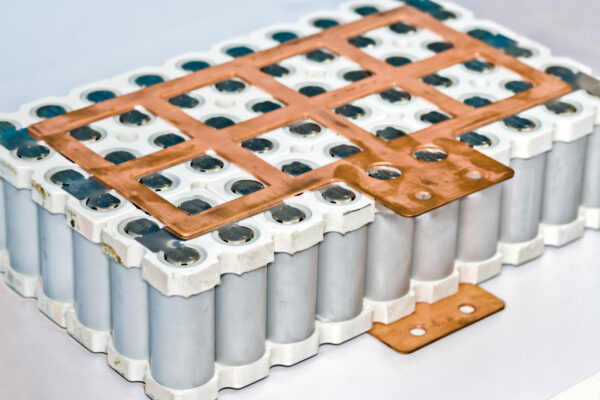
C-Therm's thermal conductivity instrumentation is helping EV battery pack designers and OEMs optimize heat dissipation in improving the safety, robustness and performance of EVs.
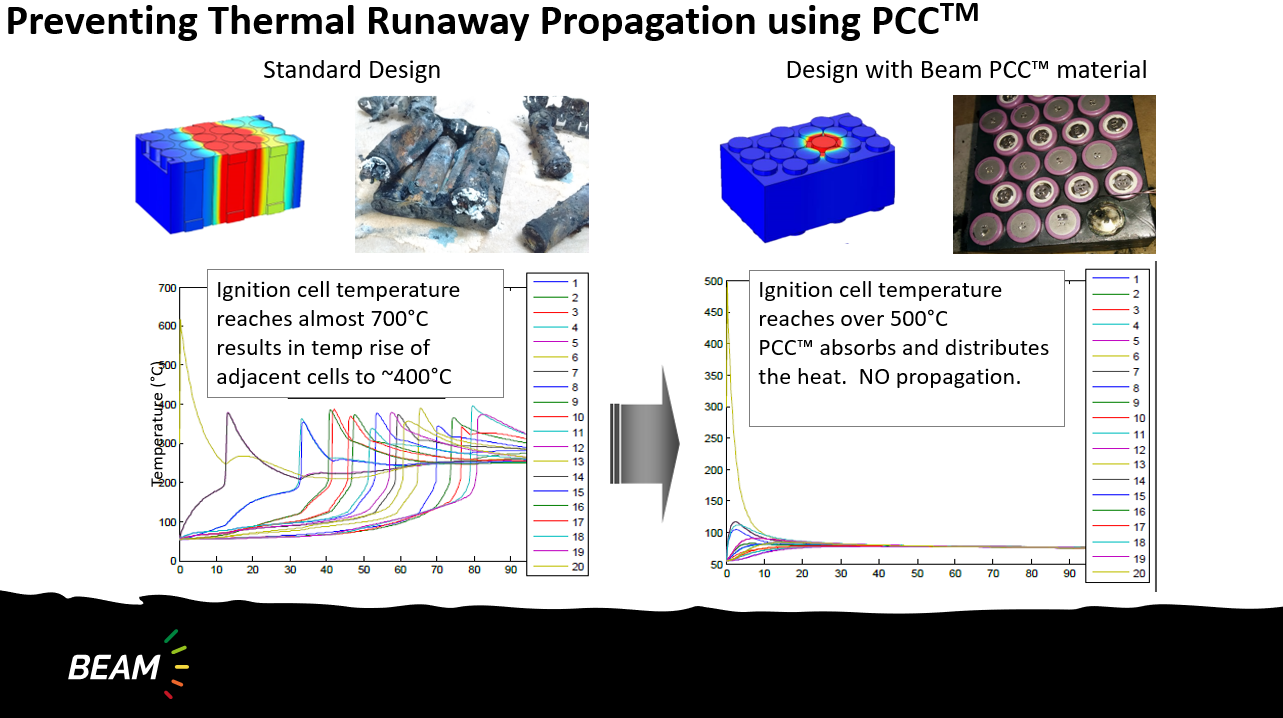
Data from a joint webinar showing how Beam Global's patented phase change material is more effective at preventing thermal runaway than standard interstitial materials
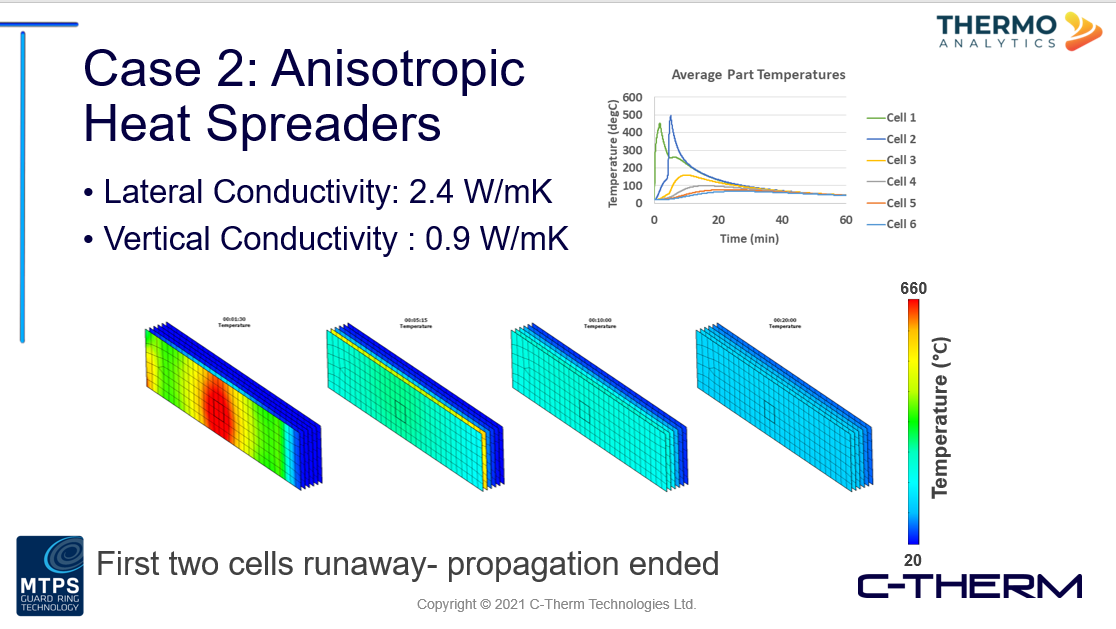
Results from our webinar with ThermalAnalytics highlighting the use anisotropic materials as heat spreaders in EVs. Data was taken using the MTPS sensor.
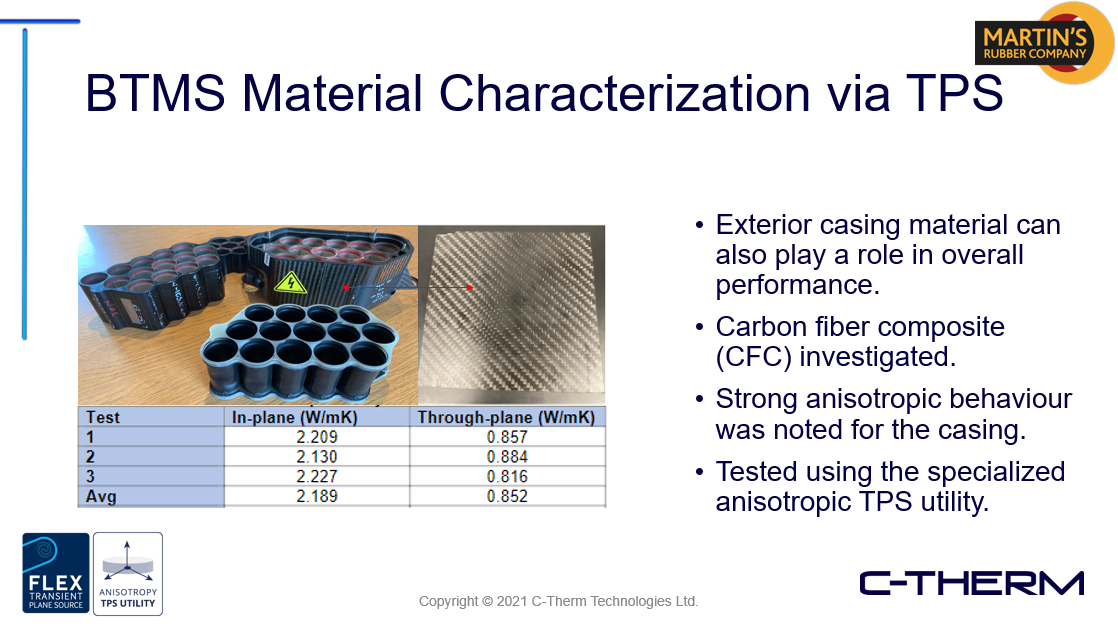
The specialized TPS anisotropic utility was used to measure the anisotropic of EV battery casing, important for Battery Thermal Management Systems (BTMS). Data is from a webinar with Martin's Rubber Company
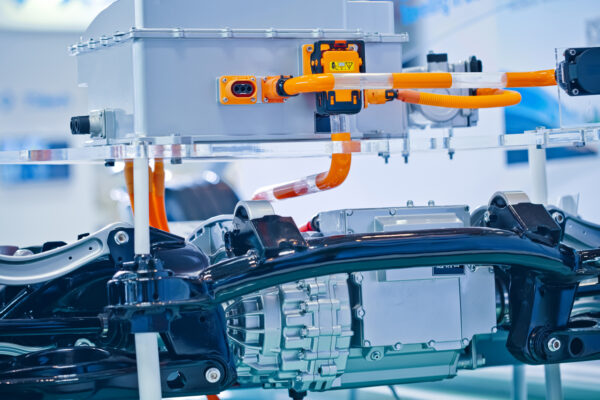
Researchers have demonstrated that a small change in the thermal conductivity of the electric motor potting compound result in a large change in peak motor temperature. For candidate potting materials below 4 W/mK, percent change in peak motor temperature ranges from about 33% to 20% per 1 W/mK change of thermal conductivity.
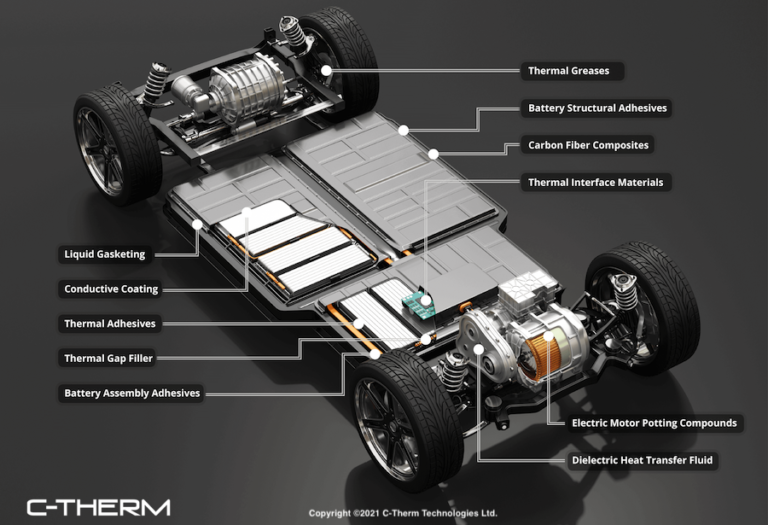
To avoid thermal management issues, it is crucial to have a proper understanding of the thermal conductivity of the materials used in the construction of EVs.
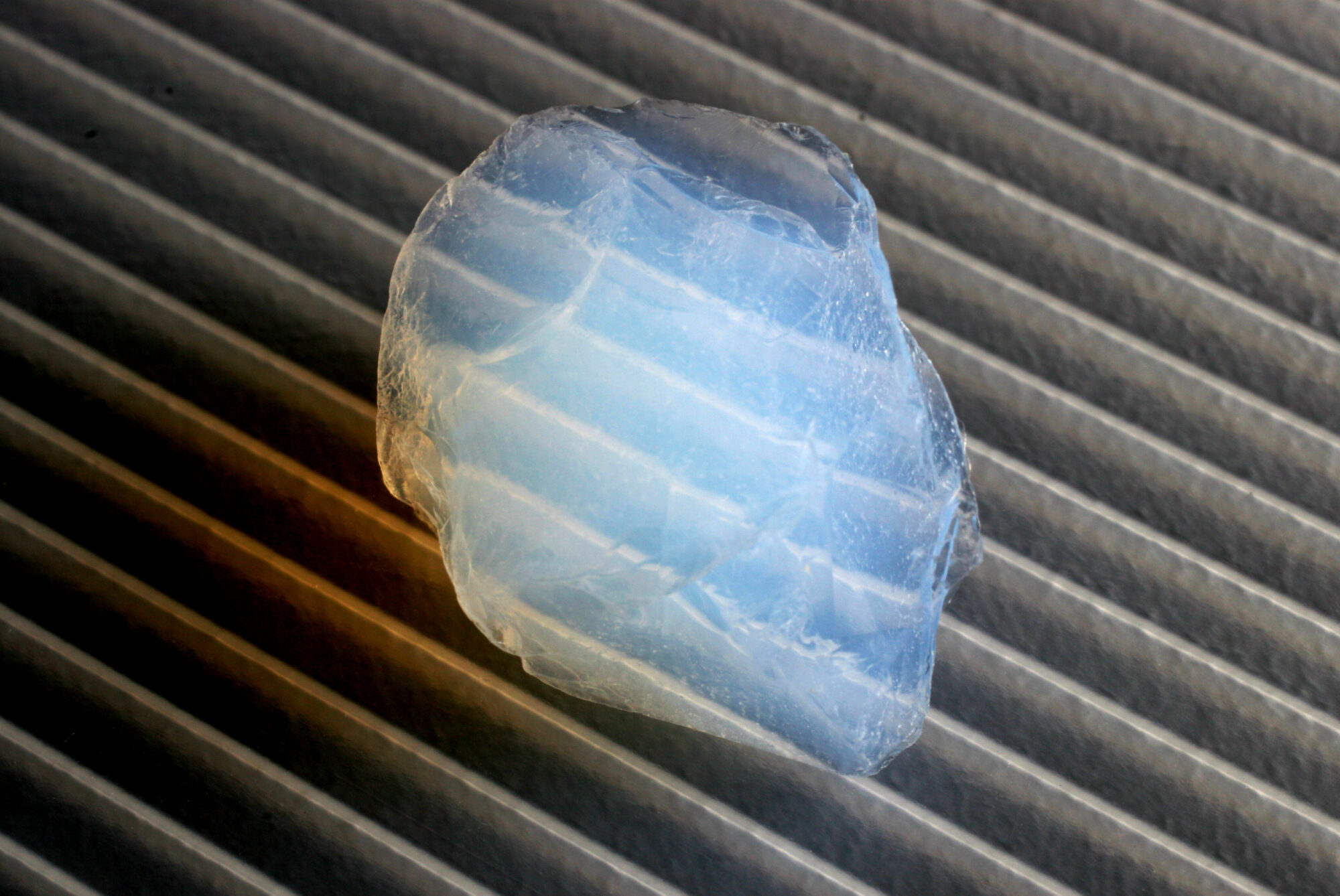
Aerogels are increasingly being applied as a thermal barrier material in battery packs for electric vehicles due to their extremely low thermal conductivity. C-Therm's Trident MTPS method provides an effective to rapidly characterize the thermal conductivity performance of aerogels.
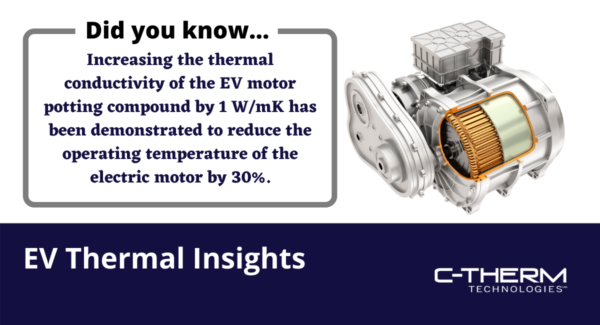
Increasing thermal conductivity of potting compounds for Electric Vehicle Motors can reduce temperature by up to 30%.
Measuring the Thermal Effusivity of Automotive Interiors Getting from A to B is no longer the measure of a quality vehicle. From entry-level models to the more luxurious, the aesthetics and interior layout have a huge impact on buyer perception. Materials used for the interior must not only look sleek, but also leave the customer comfortable and feeling as though the car is well-crafted.
Increasingly composites are incorporated into the automotive interior. They offer the benefit of greater durability, less weight and greater production efficiency. However, consumers generally prefer the look of natural materials such as leather (seating)
and wood (paneling). When consumers touch composites that are made to look convincingly like these natural materials and yet they feel like plastic – disappointment or questions of quality can negatively impact the purchase decision.
This feeling of touch is quantifiably measured in characterizing the thermal effusivity of the material with C-Therm's unique ability to measure the property directly.
Another example most can relate to is the use of synthetic leather upholstery vs fabric. While leather options tend to represent a superior class of vehicle, in hot climates the touch sensation of hot leather can be very disagreeable, and a fabric alternative may be the better option.
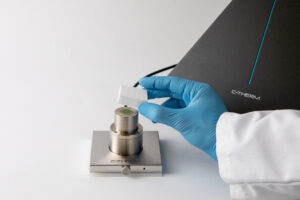
C-Therm's range of thermal conductivity and effusivity characterization equipment has a solution ready for your testing needs. The flexible, versatile and accurate Trident Thermal Property Analyzer is an ideal choice for the analysis of any number of materials used in all vehicle types on the road today as highlighted in the case highlights below.
Recommended Instruments
The ultimate thermal conductivity toolbox — MTPS, TPS, TLS and THW transient sensors in one modular…
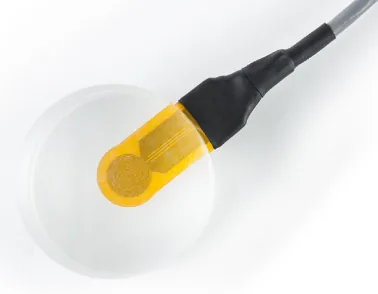
An economical, do-it-yourself Transient Plane Source (TPS) solution for academic researchers — build and customize your…
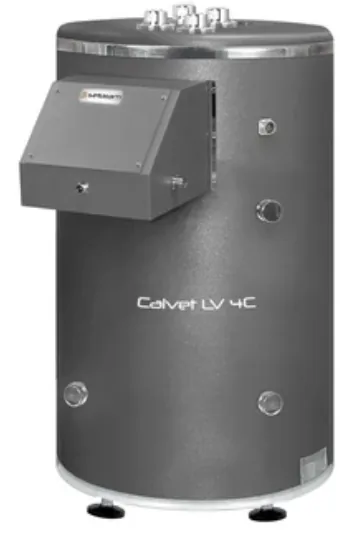
Four large cells, two simultaneous measurements — double the throughput of large-volume isothermal calorimetry.
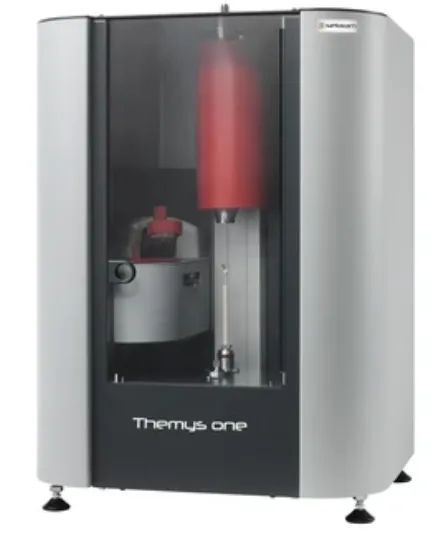
Ergonomic thermal analysis platform up to 1600 °C with interchangeable plug-and-play rods for TGA, DTA, DSC…
Our application specialists can recommend the right technique, sensor and measurement parameters — and share additional application data for your industry.
More Applications
Get application guidance, commercial quotes and demos from our thermal specialists.