C-Therm Technologies
C-Therm Trident
The ultimate thermal conductivity toolbox — MTPS, TPS, TLS and THW transient sensors in one modular…
Thermal Conductivity Application
Quantify the warm-feel / cool-touch sensation of fabrics per ASTM D7984 — trusted by the world’s top apparel brands.
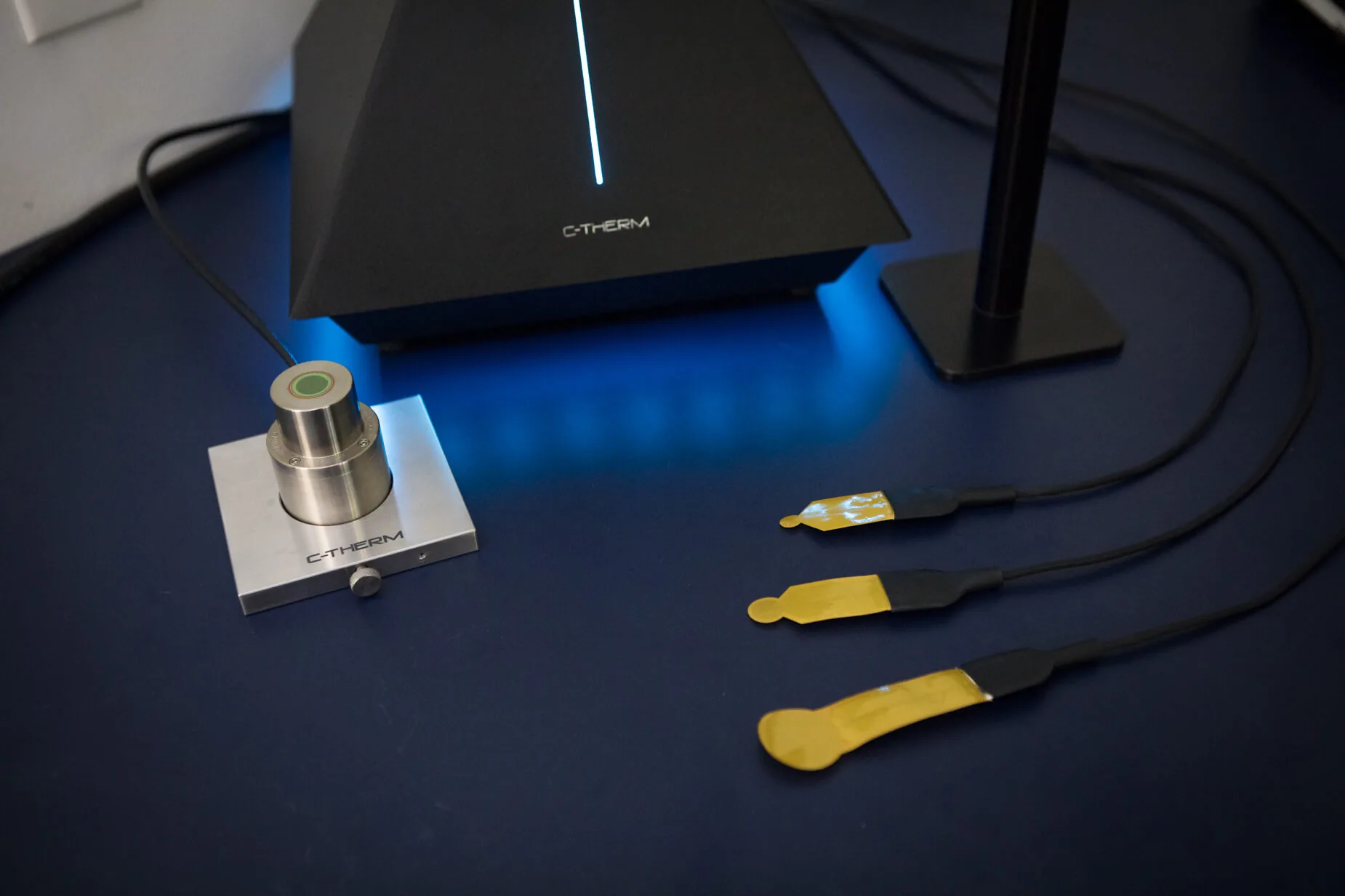
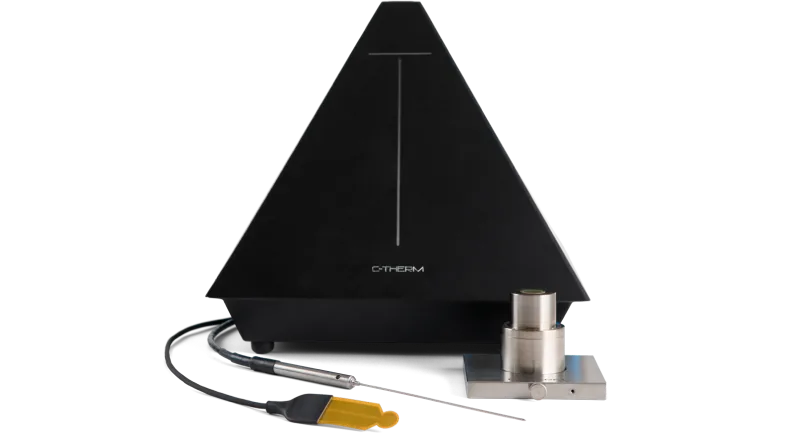
C-Therm's touch tester is the only product for quantifying touch performance that fully complies with ASTM D7984. The Tx Touch Tester is employed by the top global sports apparel brands and textile testing labs including Adidas, Columbia Sportswear, Marks (Canadian Tire), Intertek, the Taiwan Textile Research Institute, and Bureau Veritas.
Touch is a critical performance attribute in material selection and quality control for bedding textiles, automotive, and fabrics apparel sectors. Thermal effusivity quantifies how materials feel to the touch, whether warm or cool, taking away the guesswork for industries that want to improve product performance.
This testing was traditionally performed using panels of people, who could subjectively verify whether one material felt warmer or cooler than another, as the thermoreceptors in the human hand can detect the difference between materials. However, such human touch testing is extremely subjective to people doing the touch testing, and having an instrument that can accurately measure thermal effusivity takes away this variability for testing a wide range of materials for different use cases and applications.
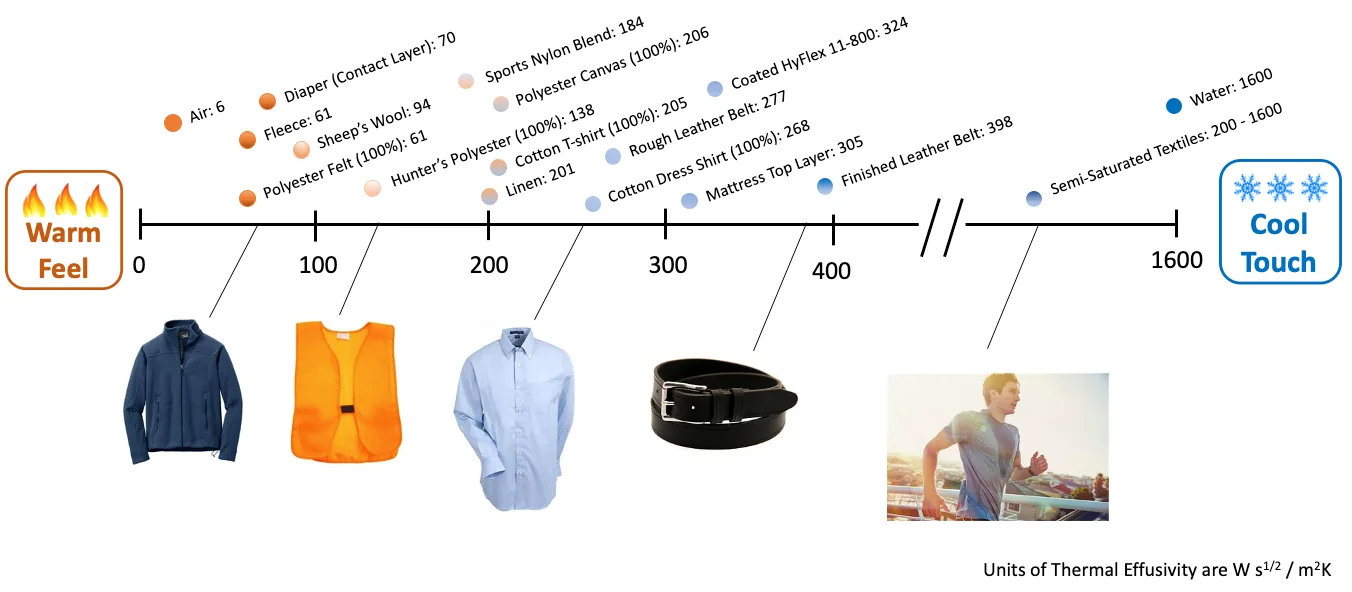
Materials with a low thermal effusivity feel warmer and materials with a higher thermal effusivity feel cooler. Testing materials for their thermal performance and touch properties has a broad range of applications, including activewear, diapers, denim, and personal protective clothing, to name a few.
Thermal effusivity testing for textiles has been standardized by the American Society for Testing Materials (ASTM). The industry led standard, ASTM D7984, utilizes C-Therm's patented Modified Transient Plane Source (MTPS)
technology for measurement. C-Therm's MTPS sensor, employed by the TX Effusivity Touch Tester, is the only standardized instrument for characterizing the thermal touch properties of textiles and other materials.
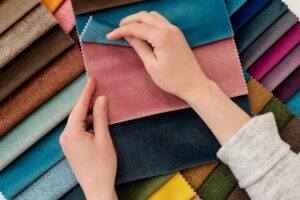
What thermal effusivity measurement is required to support claims that a material can warm you up or cool you down?
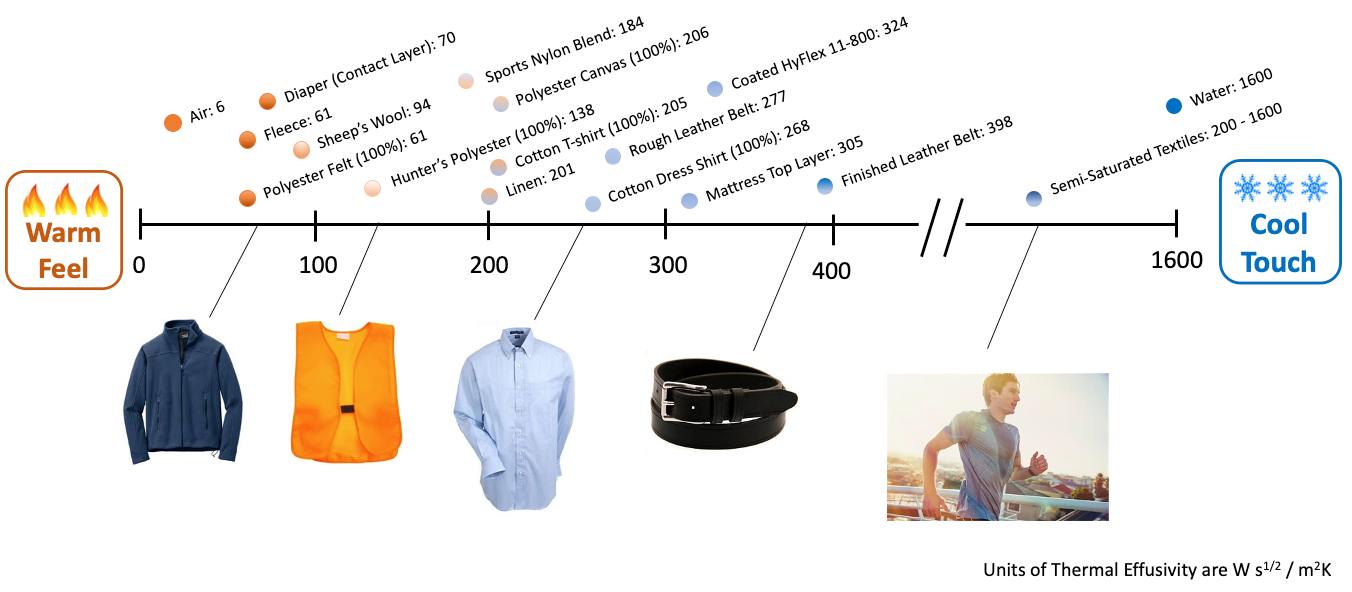
Major brands are noted to be currently employing a minimum threshold of greater than 185 Ws1/2/m2K as the minimum effusivity value for classifying a material as "Cool-Touch". Conversely, a range of somewhere between 65 – 100 Ws1/2/m2K is typically seen in classifying materials that rank in the "warm-feel" category. That said, it is important to recognize that the desired effusivity value in selecting a material is often contextual to the apparel product category and may vary considerably. Individual brands set their own performance standards for their products based on a variety of performance considerations. The importance of the effusivity value of the material needs to be considered as part of a broader evaluation of the overall material performance, including performance attributes that impact comfort such as wicking, breathability, etc.
THE WARM FEEL – COOL TOUCH PRODUCT PERFORMANCE INDEX
Recommended Instruments
The ultimate thermal conductivity toolbox — MTPS, TPS, TLS and THW transient sensors in one modular…
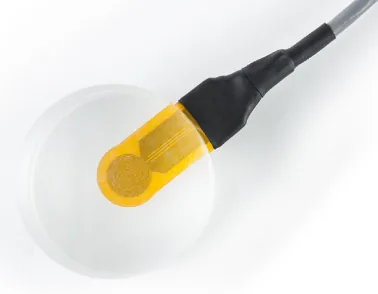
An economical, do-it-yourself Transient Plane Source (TPS) solution for academic researchers — build and customize your…
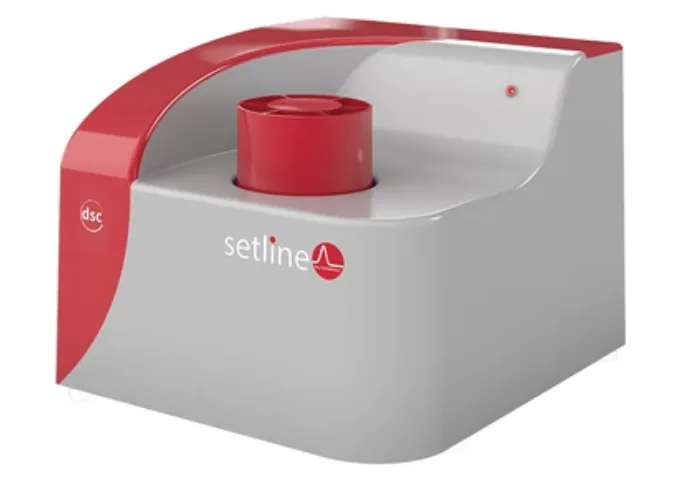
Compact, robust DSC from −170 to 700 °C for quality control, training and industry — with…
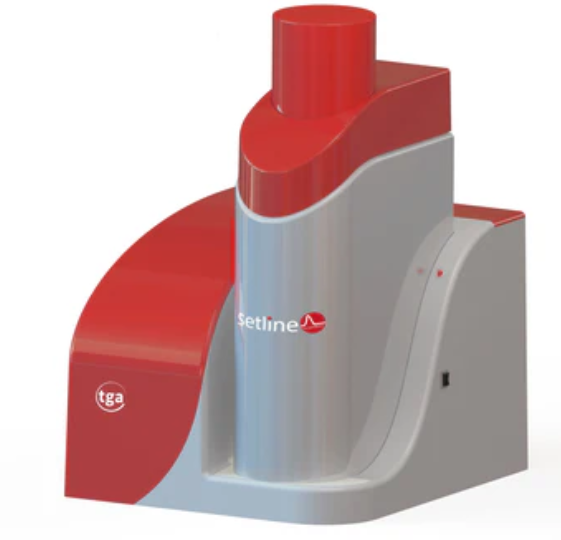
Hang-down balance TGA up to 1100 °C with magnetic calibration — ideal for education, QC, polymers,…
Our application specialists can recommend the right technique, sensor and measurement parameters — and share additional application data for your industry.
More Applications
Get application guidance, commercial quotes and demos from our thermal specialists.