C-Therm Technologies
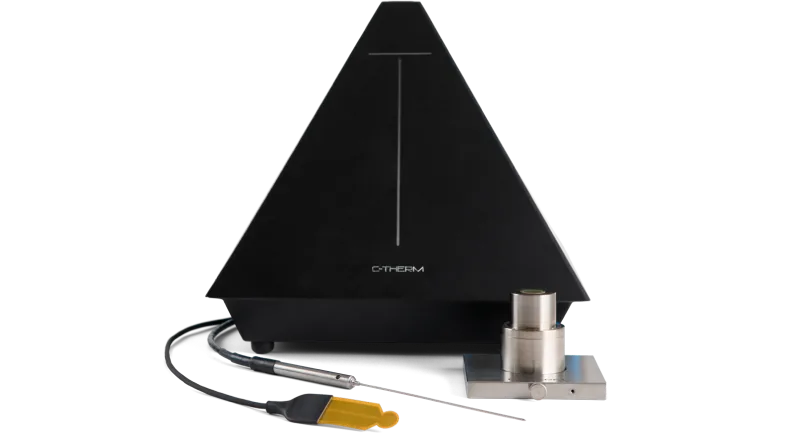
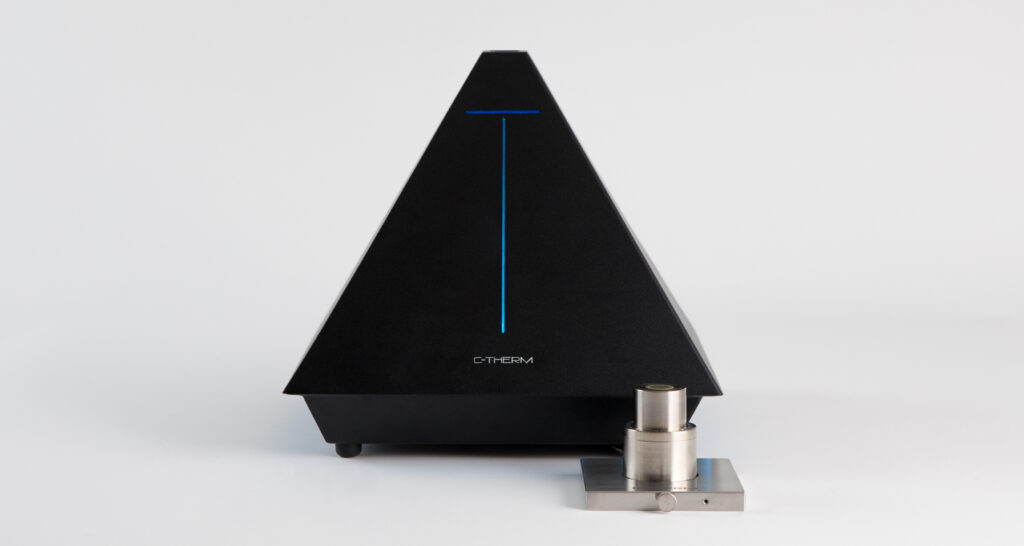
C-Therm Trident
The ultimate thermal conductivity toolbox — MTPS, TPS, TLS and THW transient sensors in one modular…
Thermal Conductivity Application
Characterize PCMs for thermal energy storage — conductivity in both solid and liquid states.
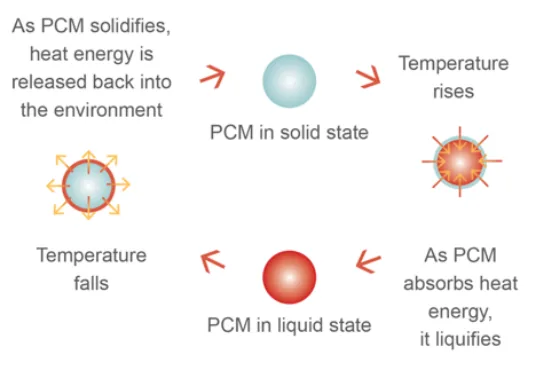
Phase change materials (PCMs) are increasingly used in energy-efficiency initiatives for Thermal Energy Storage (TES) and for passive heating or cooling. PCMs are interesting because they store the thermal energy of a phase change, called the "latent" heat of phase change, on heating, and then when cooled, they can give off the stored heat by reversing the phase change (Figure 1).
PCMs are applied in an increasing number of applications including moderating daytime temperature variations in housing environments, optimizing thermal comfort in bedding, passive cooling of electronics and thermal management of batteries.
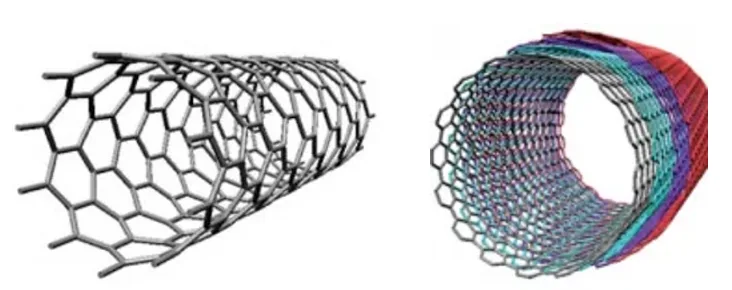
The ideal PCM is stable, chemically inert, non-flammable and has a high thermal conductivity to maximize the efficiency of the heat transfer during the phase change. Unfortunately, many materials which would otherwise make very attractive PCMs, such as paraffin and natural oils (e.g., coconut oils) are flammable, lose structural integrity with their phase change and suffer from low thermal conductivity. A highly competitive field of research has emerged to optimize the properties of these materials through the addition of additives in an effort to increase the effective thermal conductivity. The thermal conductivity is a critical attribute of the overall PCM's effectiveness.
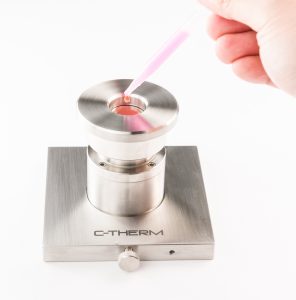
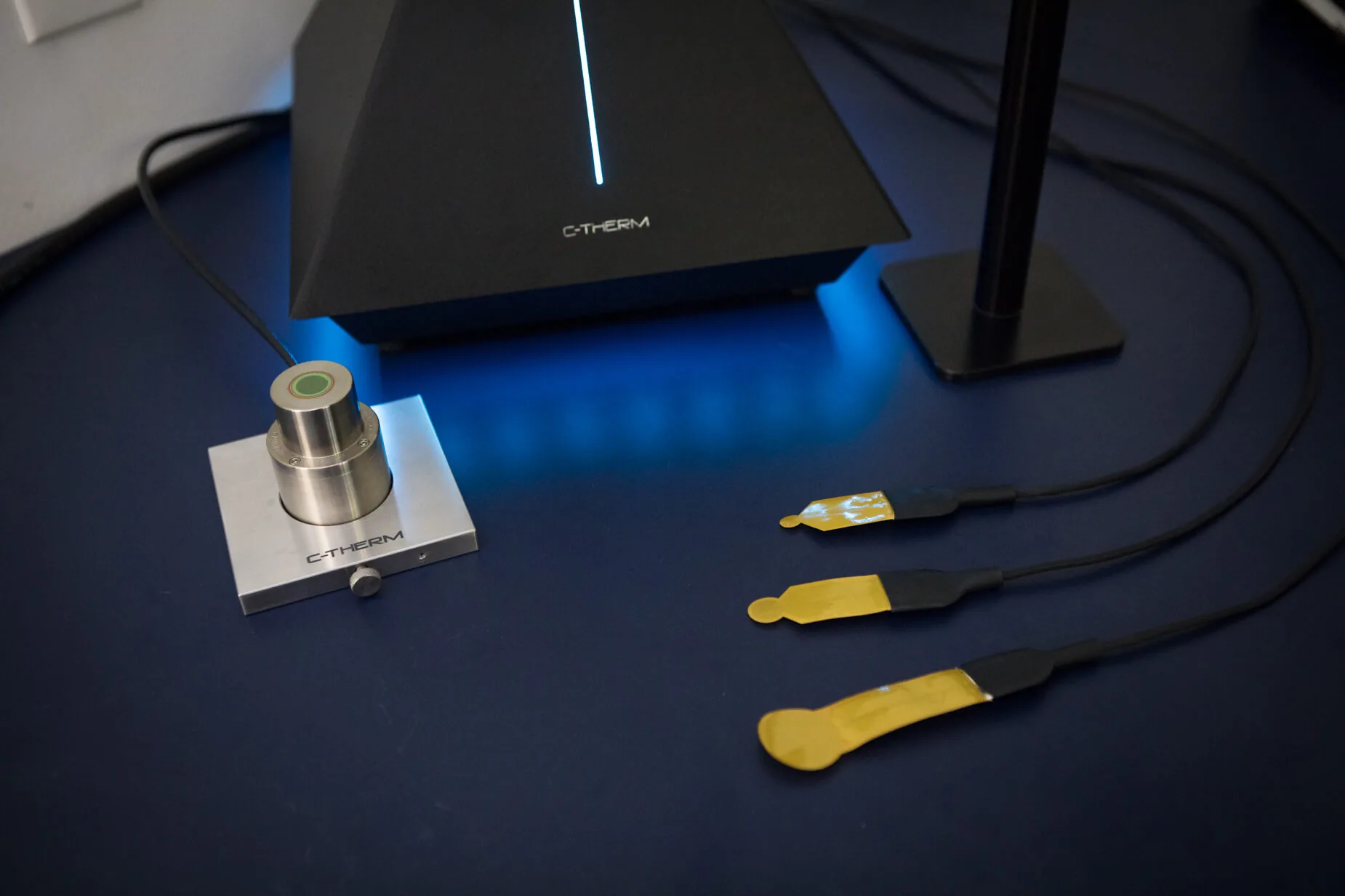
C-Therm's MTPS method is the ideal tool for characterizing the thermal conductivity of PCMs owing to its ability to test both the solid and liquid states of the material continuously.
Recommended Instruments
The ultimate thermal conductivity toolbox — MTPS, TPS, TLS and THW transient sensors in one modular…
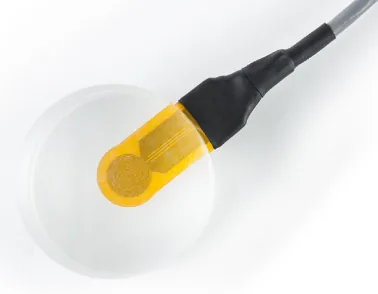
An economical, do-it-yourself Transient Plane Source (TPS) solution for academic researchers — build and customize your…
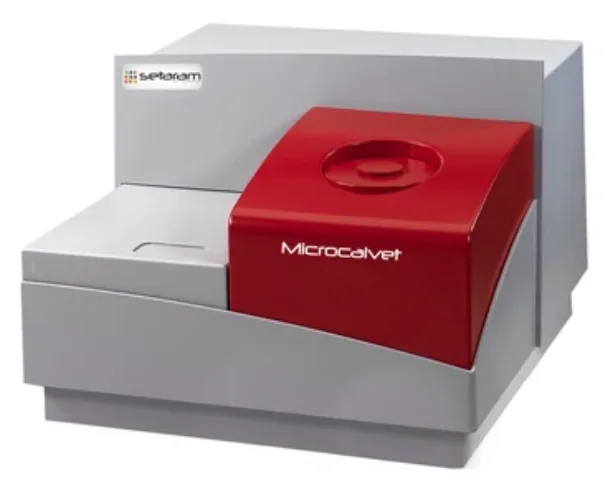
0.02 µW resolution 3D Peltier sensor with electrical calibration — for food materials, polymers, heat storage…
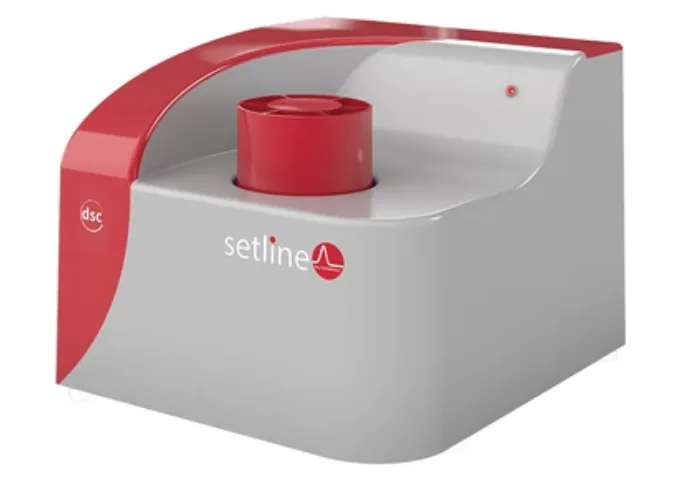
Compact, robust DSC from −170 to 700 °C for quality control, training and industry — with…
Our application specialists can recommend the right technique, sensor and measurement parameters — and share additional application data for your industry.
Get application guidance, commercial quotes and demos from our thermal specialists.