C-Therm Technologies
C-Therm Trident
The ultimate thermal conductivity toolbox — MTPS, TPS, TLS and THW transient sensors in one modular…
Thermal Conductivity Application
Thermal properties of biomaterials and implants — protecting tissue and electronics alike.
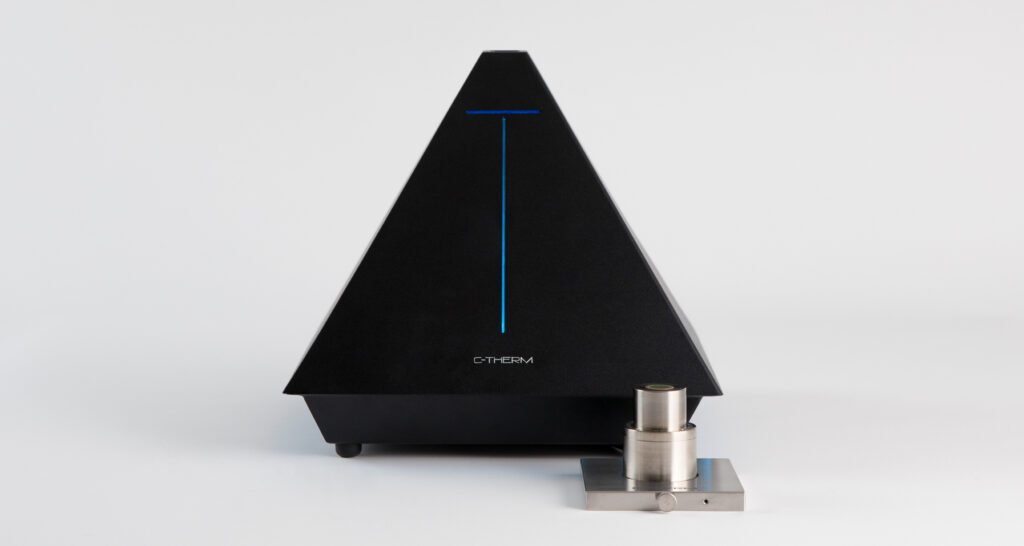
The thermal properties of biomaterials can have a significant effect on the performance of the material with regards to implantation and interfacing with biological tissues. With the advent of more sophisticated implants, including those that contain electrical components, thermal conductivity and diffusivity have become more of a concern. Thermal management for the electrical components can be a problem, as traditional polymeric materials tend to act more like thermal insulators rather than conductors. This can damage the electrical components, or more likely, damage the surrounding tissue.
Typically, heat transfer within a polymeric material occurs through phonons, a heatwave that can propagate through the crystalline matrix of a polymeric material. The degree of crystallinity will affect the thermal conductivity of such materials. To create more thermally conductive polymer materials, the degree of crystallinity and stacking of a polymer material must be high as to conduct heat away from the electrically active components. Typically, this means that materials that are more amorphous tend to act as good thermal insulators, and these amorphous materials also tend to be abundant in more biologically derived materials. One method to increase the thermal conductivity of an amorphous material would be to create self-assembled structures that are highly organized. These materials can be gels or self-assembled coated materials. Gel materials have several options for implantation, including acting as cell scaffolds for implantation or as artificial tissues for implantation. Coated materials for implants can consist of polymers that coat the metal circuits.
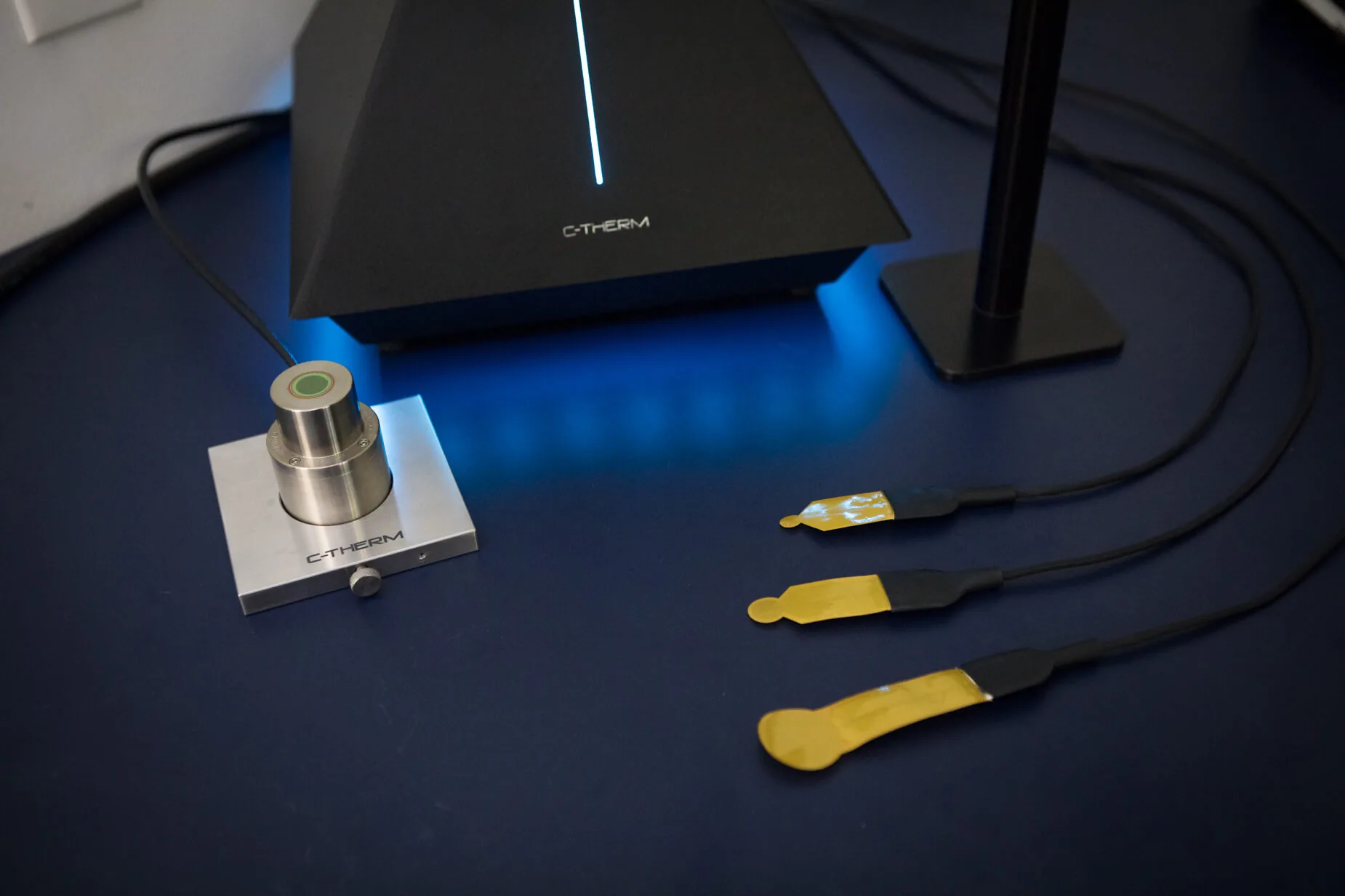
C-Therm's Trident platform can provide unique insight into the thermal behavior of these more difficult materials in employing the modified transient plane source (MTPS) technique. Gel-type materials can be explored using MTPS measurements ensuring that the thermal properties of these tissue-mimicking materials match the surrounding implantation environment.
MTPS measurements of thermal conductivity can explore electrical components or coating materials, which often possess difficult geometric constraints which other techniques find difficult to measure.
Recommended Instruments
The ultimate thermal conductivity toolbox — MTPS, TPS, TLS and THW transient sensors in one modular…
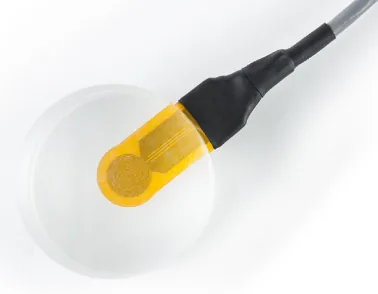
An economical, do-it-yourself Transient Plane Source (TPS) solution for academic researchers — build and customize your…
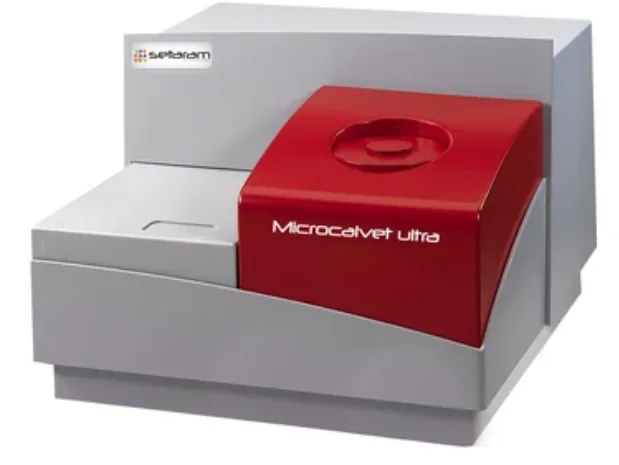
Latest-generation Peltier 3D sensor detecting microwatt-scale transitions in biomolecules, food products and polymers — with washable,…
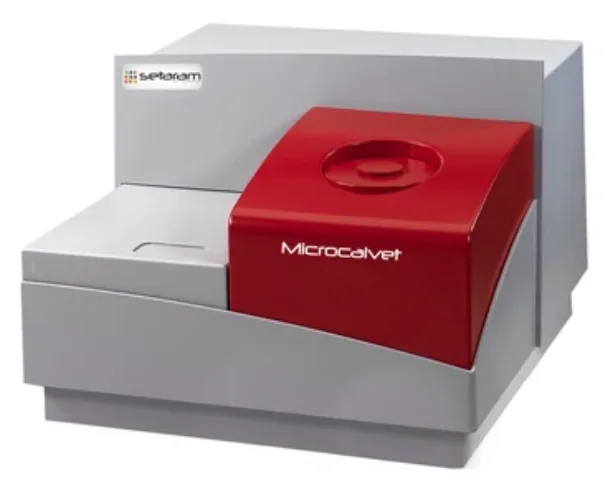
0.02 µW resolution 3D Peltier sensor with electrical calibration — for food materials, polymers, heat storage…
Our application specialists can recommend the right technique, sensor and measurement parameters — and share additional application data for your industry.
More Applications
Get application guidance, commercial quotes and demos from our thermal specialists.