C-Therm Technologies
C-Therm Trident
The ultimate thermal conductivity toolbox — MTPS, TPS, TLS and THW transient sensors in one modular…
Thermal Conductivity Application
From soils to metal powders — quantify how particle size, packing and moisture drive thermal behaviour.

Powders are a type of bulk solid comprised of fine particles that are loosely packed and are able to flow freely. They can come in many different forms and sizes, which vastly change their properties and applications. Very coarse powders can often be found in geological applications, such as loosely packed soil or gravel, and their properties are often needed to characterize the quality of a building material, or the environmental conditions of an area. Finer powders are often used for explosive applications, or in additive manufacturing where metal powders help generate new parts. Increasingly, metal powders are being used as an additive to increase the thermal performance of traditionally insulative materials like polymers or novel composites.The wide use of powders in industry and research makes it important to be able to accurately and rapidly characterize properties such as thermal conductivity, as this is a strong indicator into the thermal performance of the end material.

Metal powder, commonly used in metal additive manufacturing. These powders can be quite expensive, meaning that small test volumes are desirable.
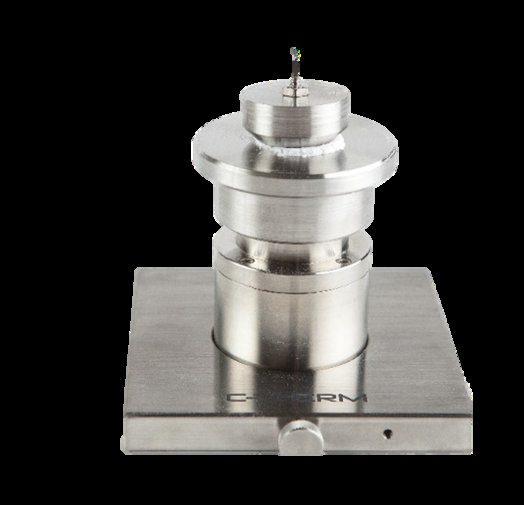
The MTPS thermal conductivity sensor, equipped with a powder cell. Powder is placed atop the sensor, and is tamped down using the provided weight.
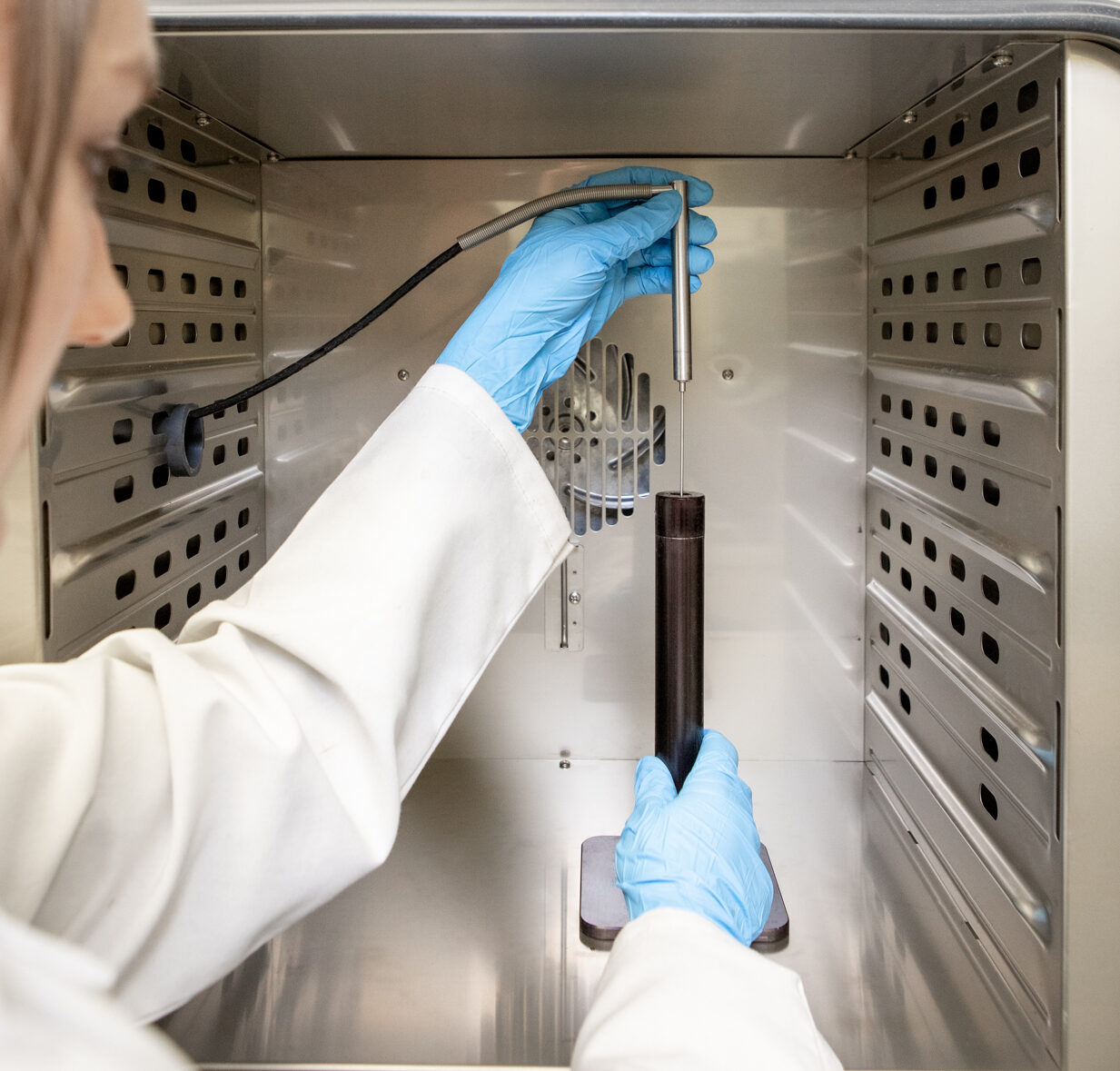
A scientist using the TLS needle probe in a thermal chamber, the probe is being placed into a vial containing the sample powder.
Characterizing a material in powder form presents many different challenges and considerations than the same material as a rigid body. Particularly, powders are much more susceptible to environmental changes due to their small size and lack of strong connection between particles. Therefore, it is often much more useful to measure the effective thermal conductivity of a powder, which considers the conditions of the surroundings as a whole.
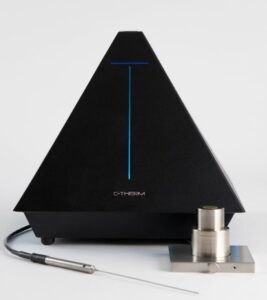
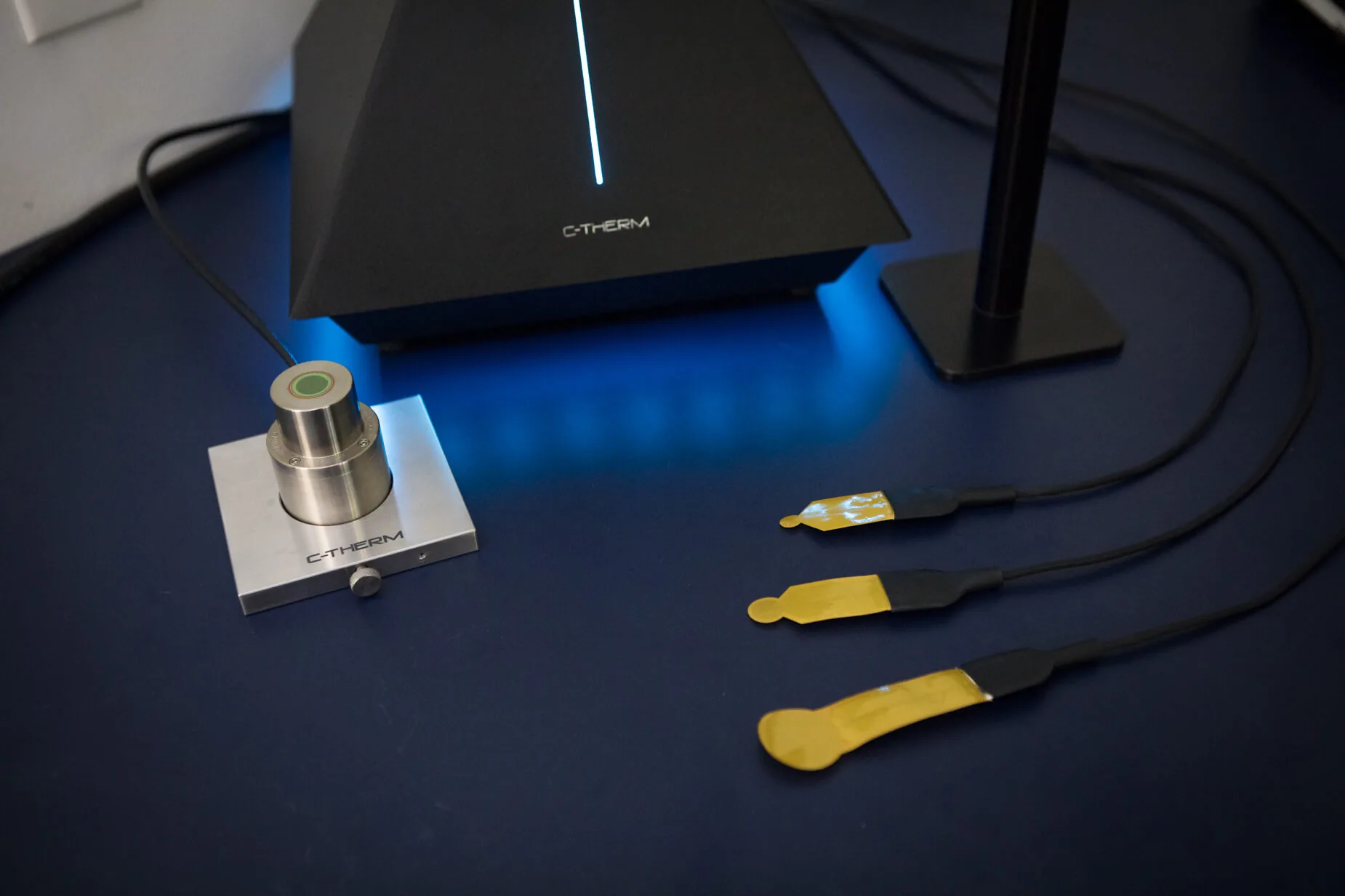
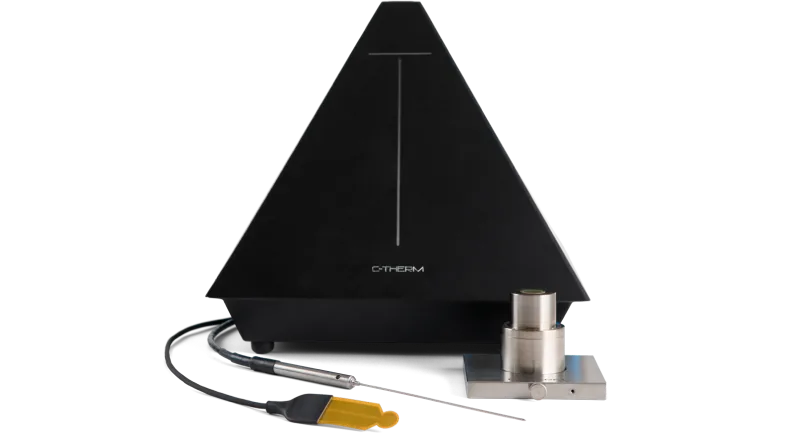
C-Therm's Trident Thermal Conductivity Instrument, configured with both the TLS and MTPS sensors, able to measure the thermal conductivity of powder materials.
For example, since powders are loosely packed, there is air present throughout the sample. The amount of air present will change depending on the compressive load placed upon the powder; a higher force will result in a tighter powder-packing, and thus less air. Measuring the effective thermal conductivity takes this into account, which is important as the sample can be arranged to best represent end-use conditions.
C-Therm's Trident Thermal Conductivity Instrument provides multiple ways to measure the effective thermal conductivity of powders, depending on the type of powder being examined. In particular, the Modified Transient Plane Source (MTPS) sensor and the Transient Line Source (TLS) sensor are both designed for rapid and accurate measurement of the thermal conductivity of powders. In particular, the MTPS requires volumes as small as 1.5 mL making it desirable for both energetic and expensive powders.
Recommended Instruments
The ultimate thermal conductivity toolbox — MTPS, TPS, TLS and THW transient sensors in one modular…
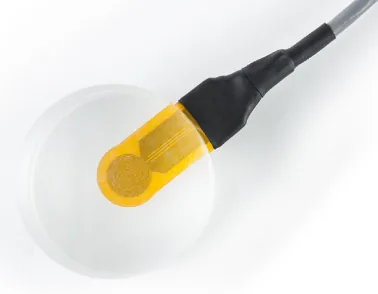
An economical, do-it-yourself Transient Plane Source (TPS) solution for academic researchers — build and customize your…
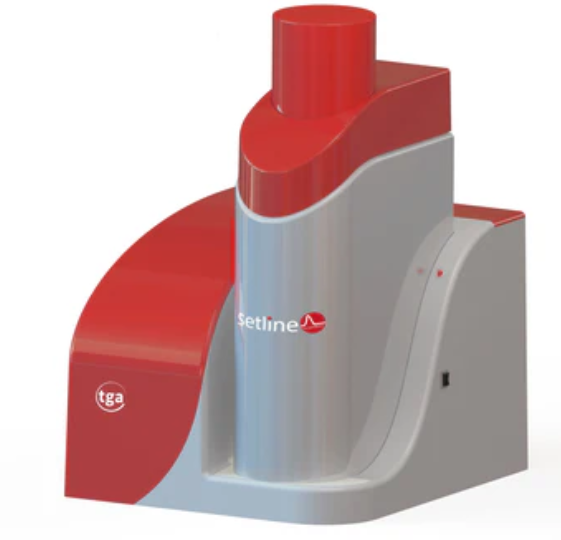
Hang-down balance TGA up to 1100 °C with magnetic calibration — ideal for education, QC, polymers,…
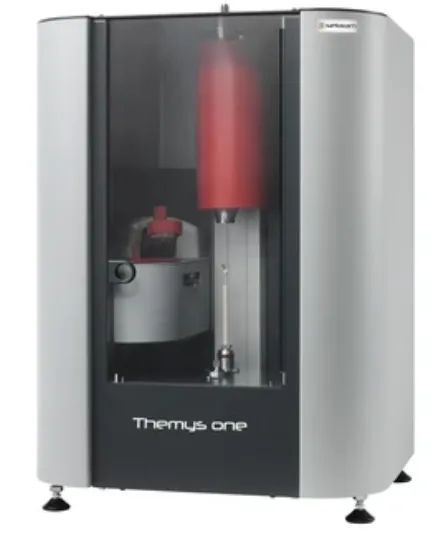
Ergonomic thermal analysis platform up to 1600 °C with interchangeable plug-and-play rods for TGA, DTA, DSC…
Our application specialists can recommend the right technique, sensor and measurement parameters — and share additional application data for your industry.
More Applications
Get application guidance, commercial quotes and demos from our thermal specialists.